Spend enough time with a demographic which closely resembles the target viewing audience for adventure sporting events, and you cannot help but notice the large drink cans close by. Even after nine weeks of boot camp, with plenty of exercise and the finest food the military has to offer, (all right, there's a good reason the dining facilities are called "mess halls) the young men and women I encountered on a weekly basis in my classroom drank can after can of sugary "energy drinks."
When my wife makes the decision to party she doesn't hit the white zinfandel or the belgian Trappist ale. She resorts to a very popular energy drink, often mixed with vodka. The drink mixture makes as much sense as my Sunday brunch switch between a large cup of Seattle's finest export, the name of which rhymes with "four bucks," and a chilled flute of mimosa. Take enough of the stuff in and you have a buzz in two different forms...a very alert drunk. But that's a different editorial statement altogether.
The folks who make the beverage in the little blue and silver cans seem to be everywhere in the past couple of months. Whether it's a guy who wants to go the speed of sound without an aircraft or a bunch of runners who want to outrun roller derby girls, the beverage and it's logo is darned near ubiquitous. And the advertising is more, er, mature now. I haven't seen as many of the silly black-and-white line-drawing animated cartoons. They're back to focusing on a message of: 'drink this if you want to go farther than anyone else.'
That little blue and silver can...what's it got? Well, about the same amount of sugar or sweetener as a typical soda...about 65 percent of the caffeine of the same sized coffee...some B-vitamins, a chemical found in detox drinks, and the amino acid taurine. If you're used to drinking coffee before a race or a workout, there's a really good chance you probably won't be hurt drinking the beverage that reportedly "gives you wings." In fact, it's not just the caffeine that may help your run performance, but the taurine.
First, taurine is commonly found in skeletal muscle, cardiac muscle and brain tissue; the chemical has been suspected to have a strong role in a number of physiological actions but until recently there was little research done. Four researchers in the United Kingdom recently investigated the amino acid's effect on endurance performance, testing run performance for a three-kilometer time trial. They found the subjects who took the taurine two hours prior to a maximum simulated 3K effort on a treadmill improved their performance by an average of 1.7 (and up to 4.2) percent, without appreciable change in heart rate, oxygen intake or perceived effort. The researchers weren't able to explain the specific reason for the improved performance, however.
But, the little aluminum can is not necessarily the "two percent solution." Energy drinks containing the two known ergogenics (caffeine and taurine) in other studies were shown to aid in endurance and resistance to fatigue, but the additional ingredients may slow or limit the body's ability to benefit from them.
REFERENCE: Balshaw, TG, Bampouras, TM, Barry, TJ, Sparks, A (2012). The effect of acute taurine ingestion on 3-km running performance in trained middle distance runners. Amino acids. Springer-Verlag, Aug 2

So, How Many Hats Do You Wear?

- Michael Bowen
- Pensacola, Florida, United States
- Husband. *Dog Dad.* Instructional Systems Specialist. Runner. (Swim-challenged) Triathlete (on hiatus). USATF LDR Surveyor. USAT (Elite Rules) CRO/2, NTO/1. RRCA Rep., FL (North). Observer Of The Human Condition.
Showing posts with label drinking. Show all posts
Showing posts with label drinking. Show all posts
Friday, February 15, 2013


Saturday, May 14, 2011
Before The Damage Is Done...Drink
If the casual observer were to look at me after a workout they would wonder if I had been doused with a fire hose. Doesn't matter what time of the year (save for the coldest weeks), what distance, or what intensity. I still am soaking wet. My college cross-country coach, my wife, my athletes and my friends all marvel at what has politely been described as "a very efficient cooling system."
I used to joke, "I sweat when I think." Who would have considered that to be true? I didn't, until I started looking closer at thermoregulation. Our skeletal muscles (including those muscles used for running), liver, heart and our brain all generate body heat. On those days when we're hotter than our surroundings we can radiate heat (think about those infrared scopes used by military and police to observe in dark conditions) to maintain a proper temperature. When the air temperature is hotter than us we absorb heat. Add to the outside heat the heat we generate from our running, and thinking about running...you are thinking about running, right...?
External heat and internal heating can raise our body's core temperature to a point where our brains have to make a command decision; how long can the body go before vital organs are injured? Our brain decides to start shutting less important functions down in order to protect itself, the heart and other vital organs. That usually means skeletal muscles take the hit. Entire muscles don't get shut down entirely, mind you, but a few fibers here and there at first...which we usually recognize as breaks in running form or decreased range of motion (shortened, choppy strides). As the temperature continues to increase the brain becomes more concerned and shuts down more muscle fibers ("is that my calf cramping?") until we decide to either cool things down by slowing down, drinking cool fluid, getting into a cooler environment or stop exercising altogether.
So it's important to keep the core temperature as low as possible, either by deflecting radiated heat from the sun and other surfaces, or by drinking so you can continue to sweat.
Runners who sweat heavily, naturally, will need to take in more fluid per hour. You can determine your sweat ratio by stepping on a scale (naked) before and after a run and looking at the weight difference, adding the volume of fluid you drank during the run, then doing the mathematics to figure out the ratio per hour. Hotter, more humid days might demand more and colder days less, but you'll have a ballpark figure on which to base your hydration plan.
After the run, it's important to begin the recovery process by replacing the fluids lost. Again, the easiest way to know how much is by stepping on the scale to find the difference in pounds between when you started and when you got done. Multiply by 16 to get the number of ounces, then start replacing fluid on a one-to-one or a one-and-a-half-to one ratio.
Naturally, the next question is "what's the best drink?" Water has been the ideal beverage for many years, and works great for most athletes, but an entire industry has developed in the past four decades because of this question. Sweat not only contains water but minerals, lactate, urea and some trace elements. The most common elements found in sweat are the electrolytes; sodium (average 0.9 grams per liter), potassium (average 0.2 grams per liter), calcium (average 0.015 grams per liter) and magnesium (average 0.0013 grams per liter). These values naturally will vary from person to person.
One of the most popular sports drinks on the market provides .4-.5 grams per liter of sodium, .125 grams per liter of potassium and 200-to-220 calories of energy per liter from carbohydrates. There are sports beverages on the market which have protein, others have electrolytes but no carbohydrates, and some include other trace minerals like chromium. This ideally allows the athlete to make up for some of the lost minerals and nutrients before the workout or race is over. The best sports drink, however, is the one which the athlete will actually drink; all the beneficial elements and chemicals a laboratory can offer (whether or not they truly help!) are of little use if the flavor of drink is terrible.
So don't forget to keep that bottle of water or sports drink handy during your runs, or make certain your run routes have places where you can get (or stash) fluids. Drink early and drink often; if you wait until you feel thirsty the damage has already been done.
Monday, June 21, 2010
Who...Or What...Do You Love?
The missus & I had another chance to get away from it all...here, taking the kids & grandkids to New Orleans. I had to teach a seminar on Friday, so driving over on Thursday afternoon was naturally out of the question. However, it also provided me a few hours of my Friday afternoon with nothing better to do than point my trusty Scion xB in the proper direction, listen to some of the tunes I'd recently downloaded to my iPod & think deep thoughts.
It occurred to me I had not talked to my father in five weeks (his seventieth birthday), & it was not like I was going to be disturbed by much at that particular time...might as well burn a few cell phone roaming minutes, no? After a healthy dose of touching base with him, & getting safely past the casinos along Mississippi's Gulf Coast, one deep thought led to another & I wanted to know what some of my New Orleans friend/s were doing.
 They had been on a cruise ship for a week with two dozen or more of their closest relatives. What had me marveling even more was the fact they were able to make it through that week without throwing anyone overboard...or consuming adult beverages. I knew they had cut back during the spring in Central Florida, but didn't know they had made the decision to cut back in that drastic a manner. They have their reasons, which are quite valid (even if I disagreed, validity is in the mind of the beholder), & I strongly applaud them for it.
 The ramifications or the rationale for such decisions hadn't quite hit until I was driving on the trip home...Then I began to think about it all: You see, we didn't drink anything around the family because being (at the least) loose around the children and grandchildren didn't seem like a good example. There were enough people on the streetcars & on the major thoroughfares who were loosened up during the weekend, right? We went out for a bite to eat & to walk around with some of our friends after the kids drove home, sufficient opportunity to loosen up and enjoy some of the more adult-oriented venues we occasionally enjoy. And while I was loose enough to not feel major pain I couldn't help but see some of the really loose denizens of the place/s we visited, most notably the crowd in one of the city's most popular karaoke bars. Believe me, there are way too many people who think they sing well. Add an abundance of adult beverages & it's a Capt'n Fun Happy Birthday Song Audition Night, minus the cake (Robin Williams' 2002 routine about Japanese men in a karaoke bar after a couple of shots of Jack Daniels' says it best.). When you see them you begin to think to yourself, 'dude, is THAT what I look like when...?'
 Right now I can say I do not have a drinking problem. There was a time in my life when you could probably say I did, but I think age & a beer-related accident (I thank God no police were around to see!) a long time ago (as well as a recent beer-related accident where we were the victims!) converted me from the quantity drinker to the quality drinker. That means I still spend the same amount of money on beer at 48 as at 18; I share/enjoy the six-pack of microbrews more than I did bogarting a case of Lone Star. I like beer a great deal, & there are days when there's nothing more wonderful after a very hot run or workout than a very cold beer. Of the friends I have, the ones for which I would say I would go through hell in a gasoline suit are very small; & the vast majority of them drink probably the same amount, give-or-take, that I do. I have many colleagues & acquaintances, however, who are perhaps one (stumbling?) step to the left or to the right of the classic hash house harrier definition: a drinker with a running problem. Love 'em, but it's the truth.
 And THAT'S where my worried mind begins to operate. I know a person's character can be molded & shaped by the people they spend the most time with. Think about it: Influence of Others -> Thought -> Decision -> Action -> Habit -> Character -> Influence on Others. I've told folks on more than a few occasions we are what we consume, spiritually as well as physically. So, can you control your own cycle? Or would you rather smash the mirror?
'Beer commercials usually show big men, manly men, doing manly things: "You've just killed a small animal. It's time for a light beer." Why not have a realistic beer commercial, with a realistic thing about beer, where someone goes, "It's five o'clock in the morning. You've just @*#d
Wednesday, July 23, 2008
My Motivation, and Some Questions
The Lower Half of (Tom Gilbert's) Six Boxes (Motivation, Skills, Training):
Doggone. The temperature went up two degrees in the space of time it took me to think about how I was going to start this piece (originally scribbled 19 July 2008). For those who need a more objective measure, that was approximately one minute, from 6:48 to 6:49 a.m. And yes, I'm feeling less than motivated to head out to the track this morning.
Wait a minute. Coach Mike, unmotivated?
It's not just the heat or the bugs that makes me think twice. I have no races planned for the next four months, so I'm doing a long (boring) cycle of base training; swimming two or three times a week, bicycling once a week, and running as often as weather and other conditions permit. When you don't have anything on the immediate horizon for which to prepare, the forecast of working out alone (especially when base or maintenance training) can make any athlete reconsider their workout.

Sure, there are times you need to suck it up and go out, regardless of what your friends are doing. But it's nice to know you are not the only one suffering through a workout. Sometimes that's the only saving grace; knowing there is someone else insane enough to get up earlier than the rest of the world, or get out and run a few thousand meters of repeats with you while the rest of the world is at a ball game or concert.
Yes, I know we all need to have a life outside of running (or swimming, or triathlon). So, I do appreciate the athletes I train who take time out of their week (or weekend) to slog along with me. The prospect of seeing them at the track (during the week) or at the seashell (mid-week or on the weekend) gives me one more good reason to get out and run.
ASK THE COACH:
Do you have any thoughts on stretching?
I think a lot about stretching (some of my thoughts are printable!), but I don't do much more than work on my achilles tendons. Some runners prefer to not stretch and never have, others do it religiously. If you're going to do it, I would recommend two things:
First, don't stretch unless your muscles are warm, following at least five minutes of activity. A cold muscle will not stretch, and is more likely to tighten up more if you try to stretch it cold.
Second, stretch gently and naturally, with slow, smooth movements. You can stretch without throwing your leg up on a countertop, bleacher bench or trash can. Stretches which keep your feet on the ground are better. Those 'throw-your-leg-on-the-bleacher' stretches are probably going to instigate the stretch reflex, and you'll end up with a muscle that's more tight than when you started.
For this weather, do you have any particular sport drink recommendations? For those of us on a tighter budget, does water work just as well keeping us hydrated?
Water works great for hydration. It has no calories and no evil after-effects, unless you're running for four hours and you run low on electrolytes, but that's another issue. If you're running for no more than an hour and you can stand the taste (or lack of taste), water will do well.
However, once you get beyond an hour of exercise, you need to think about replenishing carbohydrates and electrolytes. Depending on weight and intensity of activity, you'll need between 30 and 60 grams of carbohydrates each hour; that's 16 to 32 ounces of Gatorade (200-400kcal). If you drink Accelerade during that same activity it will take 18 to 36 ounces (150-360kcal) to replenish, and you also get 7-15 grams of protein with the deal.
My recent favorite sports drink is PowerBar Endurance Sun Tea formula; I picked up a canister at Running Wild after a friend’s recommendation. A 16-ounce serving contains 42 grams or carbohydrates (so 12-24 ounces per hour), plus 480 mg of sodium and 25mg of potassium, so I don't have to worry about electrolytes. On top of that, there's 25mg of caffeine and a very light flavor. It mixes well and doesn't leave any gunk in your bottles, either.

Suzanne doesn't like Gatorade or Accelerade at full strength, but she liked the taste of PowerBar Endurance at normal strength. If caffeine isn’t your cup of tea (pun intended), PowerBar Endurance also comes in Lemon-Lime and Fruit Punch.
The best thing you can do is find a drink that meets your needs and stick with it. I can justify spending a little more for a good sports drink when I know it will help me perform well in workouts and on race day.
We've been told to take it easy this summer until it gets a little cooler. How easy is easy, and come fall, how long does it take to recover our strength and get back into racing form?

Just like the workout regimen, easy is in the eye of the beholder. I can tell usually by change in form or footstrike when an athlete is fatigued. Your challenge is to know it for yourself and to be smart enough to back off or pull the plug.
Being in racing form is not a question of how long as much as a question of when. You cannot be at maximal fitness throughout the entire year. You can maintain base through the entire year by running long, aerobic mileage. But the question of racing form is a function of how developed your base is, what variety of speedwork (tempo runs, short specificity, long specificity) you've put in, and how gradual your buildup is intended to be. Longer, more gradual build-ups lead to higher and more extended peak periods of six to eight weeks. Shorter, steeper build-ups lead to lower and shorter peaks.
Ask yourself, 'What is my goal race?' 'How am I going to get there?' 'What am I going to do to make certain I am at my most ready?'
Tuesday, April 8, 2008
Ask the Coach - April 8, 2008
 Summer is almost here and it's going to be hot. All of us know to drink more fluids and avoid running in the heat of the day. How should the heat effect our mix of intervals and long runs?
I don't presume every runner knows to drink more fluids; more importantly than this, what fluids to drink. While your kidneys are good at controlling the amount of electrolytes passed in urine, your sweat glands are going to push out electrolytes as well as fluid as part of thermoregulation. This means plain water will do you fine while you're at the workplace, if you have a job where most of your day is spent at the desk. However, plain water can be a little, er, boring to the palate; you're not going to drink what doesn't suit your taste. Sports drinks, such as Gatorade, Powerade, Propel, and so on, are good at making certain you have sufficient hydration; the down side of these drinks are that they have a great deal of high fructose corn syrup, a cheap sweetener, and not so much in sodium, potassium, chloride and other electrolytes, which are the things you need most to be replacing.
Oh, contrary to popular belief, the carbohydrates in most beer are countered by the toxicity of the ethanol. Your liver has to work to process the alcohol and remove it from your system before it can assimilate any carbs. Since alcohol can only be passed through the system by urination, sweat or respiration, like that of caffeine, you'll lose more fluid by drinking alcohol or caffeinated beverages (iced tea, iced coffee, energy drinks) than you would sugary drinks, which take longer to pass through the gut.
You can run during the daytime, but understand that the fluid you lose through cooling your body (sweat) is taken from your blood circulating through your capillaries; that's why you'll see folks looking quite red on a hot day when they've been active. The water loss from your blood as part of the cooling process makes the blood thicker and more difficult for the heart to pump through the circulatory system. Think of it like trying to suck honey through a thin straw, compared to sucking water through the same; it's much harder. Since the blood flows slower through the vessels, it takes more pumps of the heart to move it the same distance it would travel with full fluid volume...oh, did I mention the fact your blood is going to the areas of the body needed most at exercise? That means your leg muscles are probably getting the most blood sent to it, next to the brain. That's a long way to go.
So, hotter and more humid conditions of summertime running mean your perceived effort at a particular pace is going to increase. That's bad news. The good news is there aren't many "important" summer races here. The best thing you can do is continue to run through the year, listen to what your body is telling you, and adjust your effort accordingly. As for track workouts and long runs, I suggest finding a sports drink that replaces the minerals and electrolytes you lose through sweat, and keeping a bottle or two available. You can stash bottles on a long run or get your favorite drink at the local convenience store if carrying a bottle is too much of a problem. If those don't work, then adjust your workout times to take advantage of conditions, or run at places where there are water fountains. Swimming or biking may be a good way to get some exercise this summer since it will be so hot. What's the best mix of swimming, biking and running?
 Swimming or biking may be a good way to get some exercise this summer since it will be so hot. What's the best mix of swimming, biking and running?
Swimming and bicycling are great cross-training, I like them a great deal because of the reduced impact to the musculoskeletal system. The best blend of cross-training activities depends on your fitness level and amount of time you have available to ride or swim. Borrowing the old phrase "the main thing is to keep the main thing the main thing," there is a limited degree of transfer between swimming, bicycling and running; you need to run if you want to be a good runner. If you bicycle, make certain you wear a CPSC or ANSI-approved bicycle helmet, follow *all* the rules of the road, and (please!) refrain from wearing headphones *in your ears* (there are devices that will allow you to listen to music in your helmet AND hear surrounding traffic).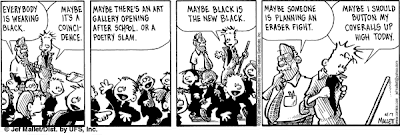 I may want to run a marathon this fall. Is it too early to start training this summer?
 Good for you. A marathon will teach you a great deal about yourself; your perceived limitations, strengths and weaknesses. Training for a marathon, especially a first marathon, takes at least 18, and up to 26 weeks, depending on fitness level and goal. If your plan is to do LaSalle Bank Chicago Marathon, around the first week of October, this would be the time to begin marathon training. Before you mention heat as an obstacle, let me remind you of a painfully obvious fact: Chicago in the first week of October can range in temperature from the high 80s (last year) to the high 30s (about five years ago). You never know what conditions are going to be like on the day. There are good training plans available, several of which have been used by ECRT athletes to run personal best times and qualify for Boston. The biggest challenge is not so much choosing a training plan, but to follow it through and make certain you toe the line on the day as healthy as possible. A personal note: Running a marathon while injured is not a good idea.
Tuesday, October 16, 2007
ECRT/Snickers Marathon Team Log: Dayton River Corridor Half
Just got through the last of Thursday's, Friday's and yesterday's e-mails and made my boss copacetic again...ha, ha, ha... Now I can pass along my weekend in Dayton.
I'm not a big fan of air travel; well, flying is fine, it's that dehumanizing stuff that goes part-and-parcel with homeland security that bothers the heck out of me. But enough of that. This year, we were smart enough to NOT go out for a seven-mile run in Clifton Gorge the day before the half. HOWEVER, we did do a couple of nice long walks on Friday afternoon and Saturday morning...perfect...just enough to keep the brain happy and not ruin our races.
This ended up being a dining extravaganza for the group; we did most of the places that we hit last year, save for Saturday night. Instead of Spaghetti Warehouse in Dayton, we got together with the RD and his wife and did Beef O'Brady's; Ray (RD) had a great time needling me, as I was cheering for LSU and the whole joint was rooting for Louisville. Well, the reason we didn't do SW this time (I think) was because we did Giovanni's on Friday evening and nearly all of us were trying to detox from the garlic; Giovanni's house dressing was loaded with the stuff, as well as their calamari.
We worked the pre-registration and race-day packet pick-up again. Fortunately, this year the race started an hour later and we had some very smart Univ. of Dayton kids working our table, so all we had to do was train them, then sit back and help clear up any problems. If it had been a repeat of last year we all would have had a crappy morning.

Temperature/condition at race start was about 58 degrees and high overcast; for those of us from Florida that's nearly perfect conditions. Most of the local participants are good at self-seeding, and maybe perhaps a little too good, because there was a big space between the front line and the crowd. Nice problem to have.
First mile was a 6:04. I knew as I made the first turn onto the bridge on Stewart St. that it was going to be a fast start pace. I worried a little bit: 'did I just sacrifice my race for a suicidal first mile?' Second mile split was called at 12:12; I still was not pleased and knew something screwy was bound to happen. I didn't feel good at all from the get-go, really; my right hamstring was tight at the junction of the lower glute (sounds like something strength-related, but I cannot tell).
Rather than deal with the hassle of taking cups of fluid on the fly (an issue I've had in the past), or not drinking altogether (another issue I've had) I carried a small 8.5 oz bottle of water with a (whole) Nuun tablet dissolved. Half a tablet is good for 8 oz of water, but I had no clue what to do with the other half and I didn't want to put it back into the tube with the other ones. So I had something to take a hit of every ten minutes or so. A warning for those of you who might think about using Nuun as part of your hydration plan: It's mildly carbonated and it will fizz up in a hand-carried bottle; so don't use a twist-off cap or it will spray you in the face. I had a sense of deja vu every time I opened the bottle, it was like what happened to me every time someone else stuffed a lime in their Corona on Friday or Saturday evening.
Last year, there were several guys who were running near my pace for the first three-to-four miles, so I had plenty of company as we went down toward the UD boathouse and toward the bike path. This year, however, either I was going faster than my contemporaries or the field got much stronger...a great majority of the race felt like a time trial from the first two miles or so. I got the pace issue worked out on the front half of the race, fortunately, and managed to go through the first 6 miles in the low 38 range.
The first signs of 'dude, it's time to pay for those first two miles' came once we got on the bottom side of the loop (turnaround) in West Carrolton. We got onto the street (very narrowly coned off, here - barely one person wide) and off the corridor bike path at that point; I could hear the breathing and footsteps of someone behind me. I must not have been hurting as badly as I thought, because he stayed right there until we got back onto the bike path and the bridge at about 7.5 miles. Even then, the guy was not putting any big distance on me. I saw Suzanne on the bike path, running relaxed and smiling. She cheered as I went by; I looked at her with that 'I'm hurting, can you tell?' look. At the bike path, Coach Rich Davis (my coach's friend) was coming from the opposite direction (a few miles back)...looking quite relaxed. He told me 'you're 19th.' About that point, all thoughts of backing off and "mailing the return trip in" went out the window.

I changed my hydration schedule from taking a swig every ten minutes to taking a swig every mile, not that it was mattering much. I quit trying to do the 'what's my pace?' math after mile 10; at that point it gets to be too much mental. Eever try to do that stuff when you don't have enough oxygen to go to your muscles, much less your head? Pace bands or GPS are probably required or highly regarded at that point, if you're not mathematically gifted.
I was getting worried about whether four or five runners were going to roll up on me like last year. Didn't happen. In fact, I was the one who managed to roll up on about three or four, including the guy that got me before mile 7. I swung wide to the right side of the path as I came around him; he tried to slide in behind me, at which point I put in a five second surge and a slide to the left side of the path. I was not going to let anyone ride me in to the finish area.
I had one last guy who was about ten yards ahead of me from mile 12 (where I finally ditched the bottle) on. I could see he was rigging too, but there was nothing left in the tank. At the turn down into the parking lot, about 800 meters from the finish, Dale was telling me to 'get that guy.' I almost told him, 'trip him, then I can...' There was zero left for anything that looked like a kick. When we got 200 meters out from the finish, the guy pulled whatever he had left out for the kick...I had little left but fumes. I finished in 1:23:44, taking third in my age group and finishing somewhere in the top 20. For a few seconds there I was disappointed at running a one minute personal best for the half and STILL getting stomped on by two guys in my age group, until I looked at the names: John Agnew and Mike Michno. John's a three-time winner of the DRCC. Mike also is a three-time winner and has a sub-four-minute mile (or more) to his credit.
So, the DRCC was a good mid-season tune-up and test of fitness for Jacksonville. I think I'm on track for a decent day in December, once I get the hydration down pat. The long runs that are scheduled for this next six weeks and the longer mid-week tempo efforts should help. Biggest issue of all is developing pace discipline; if I go out at a low six-minute pace for the first two miles of a marathon I will be so totally screwed.
Subscribe to:
Posts (Atom)