'Sometimes I think it's a shame when I get feelin' better when I'm feelin' no pain.' - "Sundown," Gordon Lightfoot (1974)
Just because a person has coached athletes for a few years, has learned from hard experience what not to do, and struggles on a regular basis to clearly communicate those lessons to people who ask questions of them does not necessarily mean they have achieved an immunity to the disorder I like to call "abject stupidity."
Somehow I managed to survive a brief exposure to this disorder on my way to my "real" job this morning.
I started to think about training for a marathon.
Those who follow my rambling, sometimes cryptic missives know marathon training nearly turned me into "once a runner" approximately six months ago. It wasn't necessarily marathon training which was the primary cause of my achilles injury as much as a failure to deal with an under-healed achilles tendonitis issue which plagued me for three or four years.
I'm not certain what made me start to think about the marathon. Could it be because the evenings and the early morning hours have become a little more cool? Perhaps the slow approach of autumn and the need to review the training plan of one of my athletes was a subtle hint. Maybe, just maybe, it was that set of 400s we ran during last night's workout.
I wasn't the one spanking the group, though. Jim took Deena and myself to the woodshed most of the workout. He was kind enough to let us out after the third set. But it was nice to float up along Jim's shoulder on the back stretch of the last 400 and be in that middle ground between floating - where you feel the spring in the toe-off - and the feel when you know there's no "extra gear" available.
So a little bit of the speed is returning; 15 seconds a mile here, 20 seconds a mile there. But I must remind myself, like Taco Bell differs from Mexican food, there is a vast difference between being "healthy" and being "fit;" being "able to run" and being "able to race." I am most certainly not out of the woods yet. But I am beginning to see glimpses of the glade.
Injured runners often take too little time off from training, don't allow the body enough time to gradually ramp back up to the level of training they were at when they injured themselves, and don't stay in touch with how their body is feeling during the ramp-up. Fail to exercise caution and restraint when increasing distance, duration, intensity, and especially when races are added, and those "small" injuries which are usually remedied with a weeks' worth of rest or cross-training can transform into "major" issues which drastically affect the overall quality of life.
Feeling no pain is not necessarily the same as feeling better. It is, however, the first step on the road to recovery.
As for this ol' coach, we're almost ready for 5,000-meter road races, and not much more. In the meantime, there's a couple of flat late-autumn and early-spring marathons I'll continue to consider; the operating word is "consider."
I'm not that stupid. Yet.

So, How Many Hats Do You Wear?

- Michael Bowen
- Pensacola, Florida, United States
- Husband. *Dog Dad.* Instructional Systems Specialist. Runner. (Swim-challenged) Triathlete (on hiatus). USATF LDR Surveyor. USAT (Elite Rules) CRO/2, NTO/1. RRCA Rep., FL (North). Observer Of The Human Condition.
Showing posts with label communication. Show all posts
Showing posts with label communication. Show all posts
Wednesday, August 17, 2011


Sunday, June 26, 2011
Everything Old Is New Again

During my younger and pre-motor vehicle-owning days I spent a great deal of time on bicycles which were called "English racers;" bicycles with frames much like touring or racing bikes, but with straight handlebars. I guess they would be called "hybrids" now. We didn't do a lot of riding after dark, although we could have in our little 15,000-person town. And the best bikes didn't have the big D-cell battery-carrying headlamps (who knew when those batteries were going to DIE?); they had the frame-mounted generator and the spring-loaded switch. Throw the switch when the sun went down and you could still be seen ripping around the neighborhood. And the harder or faster you rode the brighter the light would become.
Who knew in the age of halogen lamps and lithium batteries those old generators would still be relevant?
My wife and I participated in a telecommunications conference in Singapore this last week. Her technology newspaper received complimentary passes. Since I've written the occasional tech-related article (Anything vaguely related to fitness and gadgetry? I'm there.) she thought some consumer electronics toy might catch my eye and justify my holiday.
I helped Suzanne interview a couple of exhibitors on Tuesday morning, after which she cut me loose to take a look at some of the exposition booths for "cool stuff." The overwhelming majority of the exhibits were way over my head...until I got to the Nokia pavilion. Angry Birds is one thing, but when I saw the blue-framed mountain bicycle on a stand...well, I had to take a closer look.
Once I showed the booth exhibitors my credentials - it never hurts to have business cards - I was allowed to pedal the bike a few cranks and figure out the fuss.
The phone, secured to the handlebars, lit up and showed a "charging" icon at two turns of the pedals. While the charger is specifically designed for Nokia phones with two-millimeter pin chargers, it's not a serious stretch to figure what could be done for other phones. The fine folks at Nokia probably developed the charging system for the benefit of phone owners who don't necessarily have access fo reliable electrical power, or spend quite a bit of time on bicycles, which in this case makes perfect sense when one thinks about the state of affairs in Asia.
But you probably could use the same kind of device to charge a phone without getting on the grid. Take one exercise bicycle, add one generator, and voila! It's nothing new, mind you. There were folks who joined pedal power to their television set in the late 1970s.
Everything old isn't necessarily new again, as much as it is that we start to think about new ways to use the old stuff.
Tuesday, June 7, 2011
A Mind Is A Terrible Thing
 The aches and pains have again returned, twelve weeks into my quest to become a "runner" once again.
Our bodies can clearly communicate the message we've done more damage to ourselves than eight hours of prophylactic sleep is going to repair. Some days, it takes a couple hundred milligrams of nonsteroidal anti-inflammatories to do the trick. And on the worst days, perhaps even a bike ride rather than a run.
Like I've mentioned in past posts, when something like the little aches and pains return, it's wise to look back and see where the plan has been not followed. In this particular case it seems to have come over the last two weeks, when I increased my run times from 46 minutes to 50, and from 50 minutes to 55, following that "ten percent" rule of thumb.
However, I was doing it all wrong. I wasn't following my own counsel, and planned as though I was stronger than I truly was. I wrote in the past about the ten-percent increase at three week intervals, but figured I could do it at one-week intervals.
It's the sort of hubris which can turn a person, if they are not careful, into a former runner. John L. Parker, Jr. writes eloquently in his second work of fiction, "Again To Carthage," about the process of slowing down. In one chapter, two former Olympians, coach and athlete, talk about the marathon after a twenty-mile run, and the coach directly mentions one particular race he considered the probable cause for his relative debility.
It's the sort of hubris which can turn a person, if they are not careful, into a former runner. John L. Parker, Jr. writes eloquently in his second work of fiction, "Again To Carthage," about the process of slowing down. In one chapter, two former Olympians, coach and athlete, talk about the marathon after a twenty-mile run, and the coach directly mentions one particular race he considered the probable cause for his relative debility.
How frightening is it to be able to look at a training log and say: 'right there?' I spend more time crawling within the recesses of my own head than probably the average bear. To borrow partly from an old public service advertising campaign, "a mind is a terrible thing..." Slowing down any more than I have in the past year doesn't frighten me. Stopping altogether does.
It's the reason I tell my own athletes to err on the side of caution.
It's the reason most good training plans are exactly that, plans. If they were supposed to be rigid, without adaptation, and guaranteed to succeed we probably would have called them training itineraries.
It's the reason rest, recovery and rehabilitation are underrated.
And, it's probably the reason the best cure for a bad day is another day. And another. And another.
Tuesday, August 24, 2010
Rockin' In The Free Will
 "There's colors on the street / Red, white and blue / People shufflin' their feet / People sleepin' in their shoes / But there's a warnin' sign on the road ahead / There's a lot of people sayin' we'd be better off dead / Don't feel like Satan, but I am to them / So I try to forget it, any way I can. / Keep on rockin' in the free world..." - Neil Young (1989)
 My coaching focus is and has always been on adult runners. It's not that I don't like youth, I just prefer to deal directly with the athlete goals, limitations, choices, & strengths without the filter or static of well-meaning (but often meddlsome) parent-figures. It's enough of a challenge to explain the concept of patience and steady progress over the long haul with a new or inexperienced runner who shows great potential; a parent or grandparent who believes their ward is the next great hope for American running always wonders two things:
What can you do to make my child faster?
Why isn't their present coach doing anything?
 I've had parents who had the nerve to ask me - within earshot of their child's present coach - to work with the child. The last thing I want to be is the guy blamed for a good kid leaving a perfectly good coach.
Adults, on the other hand, have the option of free will. As long as there are no financial or educational constraints they are pretty much free to come and go as they please from training group to training group, from coach to coach. I'd like to say adults are easier to coach because you can be completely honest with them. But sometimes, honesty can be the biggest problem with coaching adults.
 Sometimes it's too much honesty: My wife reminds me on a regular basis to love and appreciate the people who continue to train regularly with me after five years. There have been times in the past I've stood at the side of the track with an apparently sour look on my face, more to do with nearsightedness coupled with watching running form from 200 meters away. Just like a grimace from a distance can masquerade as a grin, a squint can look like a scowl from afar. Not like my former coach was one to show his hand during a workout; inscrutability was his watchword. I, on the other hand, come from demonstrative fields of endeavor - drama, music, and education - and I'm genetically disinclined to to hold back with my opinion (regular readers are crying out "noooooo...").
Sometimes it's a lack of it: I recall a couple of former training mates/athletes, who when asked about the degree of injury or "beat-upness" before or during a workout, responded with a level much, much less acute than my perception. Others would hold back and appear to struggle during the front end of a workout, then cut loose with a repeat (usually the last ones) at an intensity far beyond what I assigned. After time, I learned whose word to take at face value and whose evaluation needed a little adjustment to the high or low. The "face value" athletes are refreshing, even when they decide to move on, they will tell you exactly what you need to know about how you're doing as a coach.
 Coaches, unfortunately, don't have the option of having as free a will as the athlete. We can't assign workouts just to see if we can break athletes - our "profession" is much like that of a doctor, with the guideline "First Do No Harm" indelibly etched into our mind. In fact, every action and decision should be made with the best interest of the athletes who have trusted themselves to us. I have a coaching partner who's more laid-back in nature than I am; in the interest of expanding our training group we talked about and instituted a group workout in the community close to his home on a weeknight. He has a good turnout, depending on the time of the year...very few during the winter, more during the spring and summer. While we don't directly collaborate on what workouts we're going to assign, the similarity between his workout and mine on many occasions can be astounding. Blame it on good coaching, I guess.
But, moving back to free will...a coach can't just take a night off because they feel like it, or because they hear (second-or-thirdhand) an old coaching friend has hit town. When I say with honesty, "I'm sorry, I have athletes to coach," it means, "while I would like to spend the evening drinking beer with an old friend, the marathon training of this athlete...the fitness level of this athlete...and the triathlon performance of this athlete...are more important to me - and to them."
"And their goals and desires, their free will, have become mine."
Monday, July 5, 2010
"Coach Dog"
...and I'm not talking about Dalmatians, those spotted coach dogs.
On more than one occasion I've lauded the simplicity of lifestyle of my retired racing greyhound-cum-household companion, Rubin. Given his inherent limitations - lack of opposable thumbs, inability to communicate in the English language, and occasional bouts of selective hearing - he's taught me a great deal about how to train, a good amount about how to coach, and a little bit, even, about how to maintain relationships.
Lesson one - consistent lifestyle. Rubin awakens at five o'clock every morning to take care of his immediate needs, determines whether extra rest is necessary, and continues his plan of the day accordingly. I've never heard him complain that he feels guilty about postponing a workout (in his case, a morning walk) in favor of a little extra rest, or deciding to settle for a trot around the back yard in place of a walk in the park. There are cases where his decision leads to a less-than-desirable outcome, but those are few and far between. Sometimes the weather conditions factor in, sometimes what he had for dinner the previous evening, sometimes even the availability of his "training partner." Still, his ability to adapt to the infrequent vicissitudes of greyhound life are a lesson to me.
Lesson two - sometimes a look says enough. Greyhounds are not known for barking unless they perceive a threat, so facial expressions and posture make up for the quiet nature. I've told friends on occasion: 'when an 85-pound greyhound stands between you and the television screen, you listen.' There are a number of different looks I've learned to translate, from the 'gotta go out' stare to the subtle look toward the box of Milk-Bone biscuits sitting atop the refrigerator. He's a tad more physical with Suzanne when she moves through the hall or works in the kitchen; a look with me often works where velcro dog is the preferred means of communication with my wife.
Lesson three - trust never sleeps. Greyhounds have two time contexts: Now, and forever. Really. Any dog owner can tell you. When do dogs want attention, food, walks, pets, ear scratching, belly rubs and the like? Now. How long has it been since the last treat, walk, bit of attention, or your departure from the house? Forever. They trust you're going to do the right thing, all the time; even if you fall short of their expectations (if dogs have expectations...) they still love and honor you.
So, for me? What do I think this means for individuals/athletes?
First - lifestyle consistency cannot be stressed enough. Rest if you're beat up; back off the effort if you're less than beat up, listen to your body and the conditions.
Second - communication between two people in a relationship (even between coach and athlete) is an individual matter. Some prefer lengthy chats a'la James Joyce; others prefer succinctness a'la Ernest Hemingway. No matter how you decide to communicate...
Third - do the right thing...be honest with everybody. It's simpler than trying to remember what story you told to what person.
Thanks, Rubin. Take two Milk-Bones out of petty cash.
Monday, June 21, 2010
Who...Or What...Do You Love?
The missus & I had another chance to get away from it all...here, taking the kids & grandkids to New Orleans. I had to teach a seminar on Friday, so driving over on Thursday afternoon was naturally out of the question. However, it also provided me a few hours of my Friday afternoon with nothing better to do than point my trusty Scion xB in the proper direction, listen to some of the tunes I'd recently downloaded to my iPod & think deep thoughts.
It occurred to me I had not talked to my father in five weeks (his seventieth birthday), & it was not like I was going to be disturbed by much at that particular time...might as well burn a few cell phone roaming minutes, no? After a healthy dose of touching base with him, & getting safely past the casinos along Mississippi's Gulf Coast, one deep thought led to another & I wanted to know what some of my New Orleans friend/s were doing.
 They had been on a cruise ship for a week with two dozen or more of their closest relatives. What had me marveling even more was the fact they were able to make it through that week without throwing anyone overboard...or consuming adult beverages. I knew they had cut back during the spring in Central Florida, but didn't know they had made the decision to cut back in that drastic a manner. They have their reasons, which are quite valid (even if I disagreed, validity is in the mind of the beholder), & I strongly applaud them for it.
 The ramifications or the rationale for such decisions hadn't quite hit until I was driving on the trip home...Then I began to think about it all: You see, we didn't drink anything around the family because being (at the least) loose around the children and grandchildren didn't seem like a good example. There were enough people on the streetcars & on the major thoroughfares who were loosened up during the weekend, right? We went out for a bite to eat & to walk around with some of our friends after the kids drove home, sufficient opportunity to loosen up and enjoy some of the more adult-oriented venues we occasionally enjoy. And while I was loose enough to not feel major pain I couldn't help but see some of the really loose denizens of the place/s we visited, most notably the crowd in one of the city's most popular karaoke bars. Believe me, there are way too many people who think they sing well. Add an abundance of adult beverages & it's a Capt'n Fun Happy Birthday Song Audition Night, minus the cake (Robin Williams' 2002 routine about Japanese men in a karaoke bar after a couple of shots of Jack Daniels' says it best.). When you see them you begin to think to yourself, 'dude, is THAT what I look like when...?'
 Right now I can say I do not have a drinking problem. There was a time in my life when you could probably say I did, but I think age & a beer-related accident (I thank God no police were around to see!) a long time ago (as well as a recent beer-related accident where we were the victims!) converted me from the quantity drinker to the quality drinker. That means I still spend the same amount of money on beer at 48 as at 18; I share/enjoy the six-pack of microbrews more than I did bogarting a case of Lone Star. I like beer a great deal, & there are days when there's nothing more wonderful after a very hot run or workout than a very cold beer. Of the friends I have, the ones for which I would say I would go through hell in a gasoline suit are very small; & the vast majority of them drink probably the same amount, give-or-take, that I do. I have many colleagues & acquaintances, however, who are perhaps one (stumbling?) step to the left or to the right of the classic hash house harrier definition: a drinker with a running problem. Love 'em, but it's the truth.
 And THAT'S where my worried mind begins to operate. I know a person's character can be molded & shaped by the people they spend the most time with. Think about it: Influence of Others -> Thought -> Decision -> Action -> Habit -> Character -> Influence on Others. I've told folks on more than a few occasions we are what we consume, spiritually as well as physically. So, can you control your own cycle? Or would you rather smash the mirror?
'Beer commercials usually show big men, manly men, doing manly things: "You've just killed a small animal. It's time for a light beer." Why not have a realistic beer commercial, with a realistic thing about beer, where someone goes, "It's five o'clock in the morning. You've just @*#d
Wednesday, July 29, 2009
Excuse Me, I Swore There Was A Box Here...
 My friend, Steve, & I read training advice & counsel from several different coaches. Some of these we apply into our personal training plans, some we set aside for later testing, proof or adaptation. While we might not use the recommendations ourselves, the objective is to keep an open mind to sound advice. Naturally, it's good stuff to know when we're dealing with questions...that ol' here are some alternatives stuff.
 One of the concepts we've both ascribed to we borrowed from Patrick McCann & the Endurance Corner coaches. It actually is a four-concept process:
1. Race day is about execution more than fitness. Execution is defined as the ability to run well off the bike in triathlon. Conservative bike pace strategy can be corrected on the run, but riding too fast will bite you in the behind.
2. Everyone will reach a line where running, or running at the same pace you started, will be very hard. Focus on execution is critical to not slow down.
3. To execute & create conditions for success you have to define what you can & cannot control; what you cannot control you can only adapt to.
4. We all hit the line eventually. That's where the goal or the reason you're doing what you're doing becomes critical, or else your day becomes very long.
 Steven Covey talks about the circle of influence & the circle of concern in his Seven Habits of Highly Effective People, & it's much like EC, except EC calls it the box. Stuff you can influence or control are inside the box, stuff for which you have to adapt, adjust, endure or get around are (of course,) outside the box.
 Approaching the half-way mark in this training cycle, things are beginning to become...interesting. I've started to see the box because the week's training volume is slowly increasing, both mileage & time (mileage more than time) spent. As you start moving closer & closer to the target event & the longer swims, rides, & runs start popping up on the calendar, you're praying like mad that nothing else infringes on the time you're going to have to spend training, recovering...or working at the real j-o-b.
 The j-o-b usually can be worked around if you have an understanding boss and/or a reasonable amount of holiday time at your disposal...for which I am fortunate to have both. (It's always a good idea to tell your boss you registered for an iron-distance triathlon. Easier to explain those mornings when you're walking around like a person ten years older than yourself.) Sometimes, the j-o-b stuff requires you to be there. Those are the box things you just have to deal with.
When companions, contemporaries or loving friends start throwing unprocessed fertilizer base material in your general direction, either intentionally or unintentionally, then you have to figure out whether it deserves to be in the box - & controlled - or thrown out of it & either adjusted around or plain flat out ignored as an inconvenience.
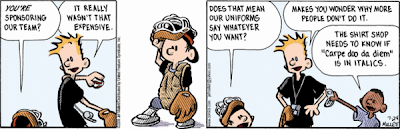 Telling your boss about your event goal is probably an inside the box action. Dramatic situations initiated by factional groups in the local running community...more likely outside of the box.
Lately, there's been a little too much drama for my own taste. I prefer to keep my box as small as possible & hope like mad the rest of the world doesn't begin to drag the boundaries of said box outward.
Sunday, May 3, 2009
Comfortably Numb
This weekend is what I would call "Anaerobilooza" in most civilized areas. Two events in the course of 10.5 hours. My original plan was to NOT participate in the morning's 10K race because I was going to participate in the 5K that night.
Reason for my choice?
A 10K road race in the morning on the first weekend of May in N. Florida is NEARLY GUARANTEED to be warm & humid. No matter what the conditions are in the two weeks leading up to the event it's going to happen. In fact, the thermostat in my house the afternoon prior to the race was in the 80-degree range; high time to fire up the A.C. Shucks. At that point you know it's going to be UGLY.
I had my goal split times with the (suicidal) hope of running sub-40 written down on a strip of pull tab. However, everything went to hell-in-a-handbasket at the first mile split (16 seconds off from the word go). At that point, I should have tossed the strip, relaxed and had fun. However, I did continue to push the issue for what it was worth...finishing a solid minute slower than my Crescent City performance weeks earlier. I was disappointed for a good 30 minutes, then took a pragmatic look at everything:
1. Too warm/humid.
2. Too little base training in the early year.
3. Tough course.
So you go on from there. Since there are no major races for months around here it's back to base-building. Nice, comfortable long(er) runs.
So, home to relax on the couch, talking to the dog & fold up the abundance of clothes piled up in the clean clothes basket...one very good reason to not have more than a single beer after the race. Well, two or three beers after a 10K on a Saturday is fine if you have nothing better to do for the rest of the day, however...
I almost shut down the idea of running the 5K in the evening...while running an easy warm-up over the first mile of the (out/back) course. The shut-down then almost happened at the first two strides off the starting line...but I talked myself into it. Hit the first mile at the pace I should have run in the morning's race. Probably top 15 to top 20.
DIGRESSION FROM TOPIC FOLLOWS:
As a course measurer, it's difficult if not impossible for me to go to local races. If I go to a race the first question I receive is: 'Hey, Mike...did you measure this course?' If I don't go to a race I get asked: 'Hey, Mike...how accurate was that course?' Once I get through with measuring a course it's up to the race director to communicate to the race organization (volunteer workers) exactly where the start, finish, turn-around & split points need to be. I've been at races where volunteers placed splits & turn points at locations where they always had been rather than at the correct location, without knowing the course had been changed/re-measured. The measurement & certification process, done for the benefit of the individual athlete, at the cost of several hundred dollars to the race, is derailed by something so simple as ignorance & lack of communication.
OKAY, NOW BACK TO THE STORY...
Turn off to the secondary road and I see cones in the middle of the street. Since I measured the course I knew exactly how the course should have been set up. No worries, it only made the course a tad longer than the certified length.
As I was running up the road I knew we were approaching the turn-around point, but it looked like the cones were going on for another 200-300 yards. At that point the ethical dilemma comes to pass: do you run the incorrect course because everyone else did, or do you turn in?
I ran a 10K earlier in the day. I was beat up. I saw the turn point & turned. I'm certain everyone freaked out when I was at the front of the field...going from 15th to first in a matter of moments is NOT NORMAL.
I ran the course I measured. I didn't do the course the RD laid out. It was the wrong decision for the right reason. I won't go into the end of the story in detail, but the RD & I had a chat after the race, & I told him to go ahead & scratch my performance. Better to have one or two people upset than 300.
Of course, then I have persons coming up & telling me I measured the course incorrectly. Damned if I do. Damned if I don't. Guess that happens when you're a guy doing your job.
Reason for my choice?
A 10K road race in the morning on the first weekend of May in N. Florida is NEARLY GUARANTEED to be warm & humid. No matter what the conditions are in the two weeks leading up to the event it's going to happen. In fact, the thermostat in my house the afternoon prior to the race was in the 80-degree range; high time to fire up the A.C. Shucks. At that point you know it's going to be UGLY.
I had my goal split times with the (suicidal) hope of running sub-40 written down on a strip of pull tab. However, everything went to hell-in-a-handbasket at the first mile split (16 seconds off from the word go). At that point, I should have tossed the strip, relaxed and had fun. However, I did continue to push the issue for what it was worth...finishing a solid minute slower than my Crescent City performance weeks earlier. I was disappointed for a good 30 minutes, then took a pragmatic look at everything:
1. Too warm/humid.
2. Too little base training in the early year.
3. Tough course.
So you go on from there. Since there are no major races for months around here it's back to base-building. Nice, comfortable long(er) runs.
So, home to relax on the couch, talking to the dog & fold up the abundance of clothes piled up in the clean clothes basket...one very good reason to not have more than a single beer after the race. Well, two or three beers after a 10K on a Saturday is fine if you have nothing better to do for the rest of the day, however...
I almost shut down the idea of running the 5K in the evening...while running an easy warm-up over the first mile of the (out/back) course. The shut-down then almost happened at the first two strides off the starting line...but I talked myself into it. Hit the first mile at the pace I should have run in the morning's race. Probably top 15 to top 20.
DIGRESSION FROM TOPIC FOLLOWS:
As a course measurer, it's difficult if not impossible for me to go to local races. If I go to a race the first question I receive is: 'Hey, Mike...did you measure this course?' If I don't go to a race I get asked: 'Hey, Mike...how accurate was that course?' Once I get through with measuring a course it's up to the race director to communicate to the race organization (volunteer workers) exactly where the start, finish, turn-around & split points need to be. I've been at races where volunteers placed splits & turn points at locations where they always had been rather than at the correct location, without knowing the course had been changed/re-measured. The measurement & certification process, done for the benefit of the individual athlete, at the cost of several hundred dollars to the race, is derailed by something so simple as ignorance & lack of communication.
OKAY, NOW BACK TO THE STORY...
Turn off to the secondary road and I see cones in the middle of the street. Since I measured the course I knew exactly how the course should have been set up. No worries, it only made the course a tad longer than the certified length.
As I was running up the road I knew we were approaching the turn-around point, but it looked like the cones were going on for another 200-300 yards. At that point the ethical dilemma comes to pass: do you run the incorrect course because everyone else did, or do you turn in?
I ran a 10K earlier in the day. I was beat up. I saw the turn point & turned. I'm certain everyone freaked out when I was at the front of the field...going from 15th to first in a matter of moments is NOT NORMAL.
I ran the course I measured. I didn't do the course the RD laid out. It was the wrong decision for the right reason. I won't go into the end of the story in detail, but the RD & I had a chat after the race, & I told him to go ahead & scratch my performance. Better to have one or two people upset than 300.
Of course, then I have persons coming up & telling me I measured the course incorrectly. Damned if I do. Damned if I don't. Guess that happens when you're a guy doing your job.
Wednesday, February 18, 2009
It's The Journey, Not The Destination
 Every once in a while I get e-mails from running friends with questions about training. Most of my closest friends are either runners, swimmers, cyclists or triathletes. If they aren't they have some sort of connection to the sport or they've known me from my former life as a musician or a preacher wanna-be. Yes, I know it seems pretty strange to hear that last one, but I did aspire, once upon a time.
Mike, I am a runner again and feel a need to improve. I think back to before my body rebelled and I get a little anxious to return to those days. I know impatience can lead to injury if I'm not careful. I am really asking an opinion on when to start pushing the envelope. I think I have made a breakthrough in the pace department without really trying. Since I have started back again my pace has been VERY slow in the beginning and I worked it down. Now suddenly in the last couple of runs I have made a colossal jump in performance. I am not sure how this happened because I do my best to just run efficiently and not wear myself out. So I am making improvements without consciously trying to. Recent runs blew me away, because the splits dropped from what I have been doing for that distance and my recovery was much the same as any other run. When do you think I should start doing some sort of speed work? I'm doing good and making my mileage goals but am still apprehensive - I don't want to break myself again. In any case I am ecstatic to be able to call myself a runner again even if I never get back to where I was before it all went south. Any suggestions?

First let me give you the good news. Consistent, steady-state running works as well as speed work to improve your speed, at least at the start, and for runners at our age. Now, I'll ask a rhetorical question: Why do you think you need speed work? If you are looking for a change in your training, you probably don't need as much speed work as you suspect. However, it's a nice change of pace (no pun intended) from doing the same route at the same pace day after day.
If you're looking for a change of training focus, then you can do a number of good speed workouts without depending on a track. All these assume an out/back route, but you can adapt for a loop course:
Progressive Tempo Run - run at an easy pace for the first half (time), then slowly increase the pace for the same period of time for the second half.
Intervals - run easy for the first half, then pick up the pace for 30sec to 1min, with equal-to-twice the time back at the easy pace for recovery; if you pick up for 30 seconds, then run easy for a minute, pick up for a minute, run easy for two... This is kind of like fartlek (speed play) workouts, but a little more structured.
Your jumps in performance are probably due to the patient manner by which you have progressed so far. You won’t be hurt by continuing what you're doing for two to three more weeks before trying a 5K. Once you've done that you might think about either another three-to-four weeks of steady runs, or adding in one speed workout a week; do the progressive tempo one week, do the fartlek-type the next. If you plan to focus on speed for a specific distance, I would use both of those workouts two times a week, or split it up with a weekly tempo run (75% effort for 20-30 minutes). Add one long day (no more than 1/5th of your total mileage for the week) and easy runs during the other two or three days during the week. Oh, and one rest day a week is a must!
Make certain your form is good throughout your workouts; erect posture, “plumb line” from the top of head to the shoulders, spine, and hips; relaxed shoulders and hands, with your elbows bent at no less than a 90-degree angle. You should propel yourself across the running surface as smoothly as possible, with no “bounce” of the horizon, and as quiet a foot strike as possible. If you place an earplug in one ear you can listen to how hard you are pounding on the running surface. When talking about distance running, quieter is always better and more efficient.
After three-or-four weeks of that, then consider another 5K as a test to see how you're doing. After a second 5K test you might want to add an additional speed workout during the week. Let your conscience be your guide. As my coach has told me in the past, running is a sport of PACE and PAtienCE.

I haven't felt much of a need to blather on about my masters' swim meet experience at Auburn this past weekend. Probably the best thing I can say is that I did some things I never had tried before and made it through without injury, or worse, death.
I had, however, an unusual phone conversation the afternoon after I got home. My ex-wife decided to call me after a 14-year hiatus; nothing better to do than to say hello and find out how my life was progressing. Before you think this was a less-than-civil conversation, let me stress that the last phone call we had, around Christmas of 1995, was, er, interesting. Interesting, in this case meant: 'boy was I a fool to run off rather than work out the marriage.' Sometimes the old phrase time heals all wounds is absolutely true. I was glad to hear her life had taken a turn for the positive; she had married a good man in her home town, earned her GED & was working for a major banking firm in the southeast US.
I had, however, an unusual phone conversation the afternoon after I got home. My ex-wife decided to call me after a 14-year hiatus; nothing better to do than to say hello and find out how my life was progressing. Before you think this was a less-than-civil conversation, let me stress that the last phone call we had, around Christmas of 1995, was, er, interesting. Interesting, in this case meant: 'boy was I a fool to run off rather than work out the marriage.' Sometimes the old phrase time heals all wounds is absolutely true. I was glad to hear her life had taken a turn for the positive; she had married a good man in her home town, earned her GED & was working for a major banking firm in the southeast US.
While I told her a lot about what I was doing here, I don't think she understood much of it. I definitely developed a different life in the 17 years since we divorced, one even more foreign to her than the one I had when we were married. As I hung up the phone, I realized something: Our intersection, while brief, was an important one in my education about life, women, leadership, and more. She's on her path, I'm on mine, and I hope she finds her happiness during the journey.
May the trail rise up to meet you
May your heart rejoice in song
May the skies be fair above you
As you journey ever on
Ever on, ever on
Ever on, ever on
In this planetary circle
We are but a single stone
Spinning on our fragile axis
Through the endless night alone
Ever on, ever on
Ever on, ever on
May your love be there to guide us
May it always keep us strong
May we walk within your footsteps
As you lead us ever on
Ever on, ever on
Ever on, ever on
Ever on, ever on
Ever on, ever on
Dan Fogelberg (1951-2008)
Monday, December 8, 2008
Lost In Translation
 Last night was the local triathlon club's general membership meeting, holiday party, eat, drink, merriment-a-thon, or drunken bacchanal, depending on your particular point of view. Coming two days following the swim group's (post-workout) holiday breakfast & five days following the local running group's mid-week run/social...there were ample opportunities for "translation." Well, more of opportunities to look at the similarities, differences & idiosyncracies of three completely different groups, some of which have intersecting membership sets.
 First, swimmers can discuss almost any topic at a conversational tone in a group of people, because they are more likely talking to the closest three or four persons around them. The next lane, or the next four chairs on either side of them might as well be an entire world away, because it is. I'm only concerned about someone in the next lane if their kicking gets as strange as mine is once fatigue sets in...or if they're doing the backstroke (of course, my lane-mates are more scared of me during the backstroke section of a workout than they are any other lane).
 Runners are going to speak at the top of their voice, especially because everyone else is. That's usually a side-effect of alcohol, I realize; give a runner a couple (or a couple too many) beers & they feel the irrational desire to announce all sorts of embarrassing stuff to the entire world. Most of the time they are fortunate & nobody hears a thing...once again, the rest of the room is all at a near-bellow to their closest companions. The only time anything really scandalous is revealed is if someone with the lack of impulse control hears it & passes it along to their group of fellow curiosity compulsives...that's how mass communication (and unearned reputations) happens. The only other time is when something is blurted out as the volume wanes in all the other groups. Happens every once in a while, with humorous (if you're the hearer) or disastrous (if you're the speaker) consequences.
If you're a leader, forget having announcements at the meetings of either one of these two groups. The former group wants to save their oxygen; the latter group would prefer you not shout & utilize more than your fair share of the same.
 The announcement portion of last night's triathlon group meeting was done at a good time; all of the meeting participants had enough time to consume at least one adult beverage. But we weren't three sheets to the wind, nor in a room where we couldn't hear each other converse. Pragmatic conversation. Of course, there was also good food at hand, so we wanted to get our fill before the main portion of the meeting; the white elephant gift exchange. Probably the most civil game of "dirty Santa" I've ever experienced.
I guess when half of the white elephant items are alcoholic & the other half are practical items for the average triathlete (yep, a pragmatic bunch!) civility will abound. That's probably the joy of dealing with most triathletes...the drafting rule from most event bike legs often carries over into the other aspects of their lives. It would be interesting to see how a triathlete drives to the mall or deals with the struggle for a parking space. Bet they take the space nearest the exit.
Tuesday, July 22, 2008
Hey, Buddy, I'm Tired Of Begging
"...I am uncomfortable lying to a child; it feels like building a trap for something wild..." - David Crosby (2000)
I was on my way out of the office this afternoon to teach my study skills and test-taking seminar when a friend began to ask about the running clubs I associate with downtown. Oh, oh. This can't be good.
So, I took the time to hear his issue, and it was one that seems more amazing and frustrating than anything I've ever heard as an athlete, coach, or "overly officious representative of a national running organization," as some have described me.
I'll borrow from the e-mail my friend sent to Ray Palmer, president of the Pensacola Sports Association, as part of his cry for assistance:
"Six Pensacola youth track athletes, part of AAU-Salvation Army Golden Soldiers Track Club qualified for the AAU National Championship meet to be held in Detroit, MI on 25 July-02 August. The excitement of their accomplishment was quickly demoted (sic) when their Sponsor, local Salvation Army, disclosed that they would not be able to support these athletes for the finals thus leaving them on their own for any continued participation."
"The children were told in the beginning of the season that they would be "flown" to the finals if they made it. According to the (track coaching staff), the Salvation Army's response was that they did not expect the athletes to win."
(EDITORIAL COMMENT - I had a conversation with the local Salvation Army's Athletic Director on this particular topic, after asking whether there was any truth to the above. Sounds like there was a case of "Chinese telephony" at best, "CYA" somewhere in the middle, and hyperbole or outright disinformation at the worst. SA's response was more in line with, "we did not expect them to do so well." There also seems to be a conflict between the SA and the coaching staff, the result of a dressing-down of the coach by SA after administrative shortcomings on the coach's part. MB, Jul 25 2008)
Where do I explode or go off on a Postal Service-esque rampage? The first target, as can be expected, should be the local Salvation Army. Why would you even make the faintest promise to someone, without hope of fulfillment? I would prefer to not go into the theological realm and speak about faith, or the lack thereof, on the part of this sponsor.
(EDITORIAL COMMENT - After receiving clarity from the SA athletic director, they are off the targeting list. The track coach, on the other hand... For me, this may be an expensive lesson learned. MB, Jul 25 2008)
Secondly, why my friend expected assistance of the PSA, a for-profit organization that puts on one running event a year, is beyond me. I'm going to try to not throw stones at one single running group within the Pensacola area, of which there are (at least) five. Why didn't the friend of Pensacola youth sports, as my friend identified himself in his letter to the PSA, know to speak to two or three of the larger clubs, or any of the local running impressari?
(EDITORIAL COMMENT - SA Athletic Director has not been in contact with PSA, nor the "friend of Pensacola youth sports." MB, Jul 25 2008)
I guess it's fortunate he knew my role as a coach, athlete and sometimes officious running bureaucrat. However, outside of a token amount of support from some of the local running community and a down-home version of an economic stimulus package, the six youth are getting squat from the local running community. I could get very cranky and play a few cards, but I'm going to hold them close to my vest for future use.
(EDITORIAL COMMENT - The "friend of Pensacola youth sports" did not know of any other source within the local running community, ergo he went to PSA. MB, Jul 25 2008)
No athlete should have to go hat in hand to the general public in order to participate in the sport they love and in which they excel.
I've gone hat in hand to the local club leaders in order to support RRCA's "Kids Run The Nation." I've mentioned the matching support of the RRCA Vice President David Cotter. I am not certain how many clubs have donated, or whether the word has been passed along to their general membership.
Imagine if each RRCA member, 175,000 strong, were to donate $5 apiece. That's over $850,000 that could be funneled into youth running programs. How many youth, of all ages, of all socioeconomic categories, could be served by a Kids Run The Nation grant?
Running is too much fun to be left on the sidelines, hat in hand.
I was on my way out of the office this afternoon to teach my study skills and test-taking seminar when a friend began to ask about the running clubs I associate with downtown. Oh, oh. This can't be good.
So, I took the time to hear his issue, and it was one that seems more amazing and frustrating than anything I've ever heard as an athlete, coach, or "overly officious representative of a national running organization," as some have described me.
I'll borrow from the e-mail my friend sent to Ray Palmer, president of the Pensacola Sports Association, as part of his cry for assistance:
"Six Pensacola youth track athletes, part of AAU-Salvation Army Golden Soldiers Track Club qualified for the AAU National Championship meet to be held in Detroit, MI on 25 July-02 August. The excitement of their accomplishment was quickly demoted (sic) when their Sponsor, local Salvation Army, disclosed that they would not be able to support these athletes for the finals thus leaving them on their own for any continued participation."
"The children were told in the beginning of the season that they would be "flown" to the finals if they made it. According to the (track coaching staff), the Salvation Army's response was that they did not expect the athletes to win."
(EDITORIAL COMMENT - I had a conversation with the local Salvation Army's Athletic Director on this particular topic, after asking whether there was any truth to the above. Sounds like there was a case of "Chinese telephony" at best, "CYA" somewhere in the middle, and hyperbole or outright disinformation at the worst. SA's response was more in line with, "we did not expect them to do so well." There also seems to be a conflict between the SA and the coaching staff, the result of a dressing-down of the coach by SA after administrative shortcomings on the coach's part. MB, Jul 25 2008)
Where do I explode or go off on a Postal Service-esque rampage? The first target, as can be expected, should be the local Salvation Army. Why would you even make the faintest promise to someone, without hope of fulfillment? I would prefer to not go into the theological realm and speak about faith, or the lack thereof, on the part of this sponsor.
(EDITORIAL COMMENT - After receiving clarity from the SA athletic director, they are off the targeting list. The track coach, on the other hand... For me, this may be an expensive lesson learned. MB, Jul 25 2008)
Secondly, why my friend expected assistance of the PSA, a for-profit organization that puts on one running event a year, is beyond me. I'm going to try to not throw stones at one single running group within the Pensacola area, of which there are (at least) five. Why didn't the friend of Pensacola youth sports, as my friend identified himself in his letter to the PSA, know to speak to two or three of the larger clubs, or any of the local running impressari?
(EDITORIAL COMMENT - SA Athletic Director has not been in contact with PSA, nor the "friend of Pensacola youth sports." MB, Jul 25 2008)
I guess it's fortunate he knew my role as a coach, athlete and sometimes officious running bureaucrat. However, outside of a token amount of support from some of the local running community and a down-home version of an economic stimulus package, the six youth are getting squat from the local running community. I could get very cranky and play a few cards, but I'm going to hold them close to my vest for future use.
(EDITORIAL COMMENT - The "friend of Pensacola youth sports" did not know of any other source within the local running community, ergo he went to PSA. MB, Jul 25 2008)
No athlete should have to go hat in hand to the general public in order to participate in the sport they love and in which they excel.
I've gone hat in hand to the local club leaders in order to support RRCA's "Kids Run The Nation." I've mentioned the matching support of the RRCA Vice President David Cotter. I am not certain how many clubs have donated, or whether the word has been passed along to their general membership.
Imagine if each RRCA member, 175,000 strong, were to donate $5 apiece. That's over $850,000 that could be funneled into youth running programs. How many youth, of all ages, of all socioeconomic categories, could be served by a Kids Run The Nation grant?
Running is too much fun to be left on the sidelines, hat in hand.
Thursday, August 30, 2007
Benchmarks
 Listening to the radio this morning on the way to the pool, I couldn't help but think about the difference between the present administration's take on Iraq, compared to the General Accountability Office. The GAO says that 13 of 18 political and military goals have not been satisfactorily met.
If you're doing the math, that's a little under 28 percent accomplished. A baseball player with a batting average of .277 might be nearly an All-Star, however, if that's their fielding percentage I can guarantee you he's not taking the field on my team.
If you're doing repeats on the track, say, 18 of them, and the goal is to hit them in 90 seconds, and you only hit five...I think I'm going to tell you your goal of running 13 of them (that's a 5,000-meter race for those of you doing the math) in 18:40 is not likely; a 20:06 is more realistic. Or, we might start to take a look at whether you need to deal with a longer distance, where a slower pace and greater endurance are going to trump sheer foot speed.
Maybe you, like the administration, cry out in anguish, saying 'but that's not fair to place an all or nothing measurement on a benchmark; just because I didn't make it in 90 seconds doesn't mean a 94-second quarter is a bad thing.' Racing is the purest benchmark of all. Either you make it, or you don't. If you get beat by three persons, and the awards are three-deep, there's no 'close, but no cigar' award for fourth place. You get to stand by and clap.
Hm...beer-drinkers at post-race parties are rather Zen, don't you think? Choose between putting down your beer or providing the sound of one hand clapping. Oriental thought meets western philosophy in one hot, sweaty, alcohol-induced conundrum.

Love of coffee, digestive functions, and...yeah...that sounds like 30 minutes into our old Sunday morning runs. I have a love-hate relationship with them right now; since there's no one at my level I spent most of my run by myself the other weekend. Payback is going to come this Sunday, since Christian, Petra and I are going to ride instead (partly because of the three-day weekend, partly because it's too d@mned hot to do otherwise).
Tomorrow is the last day for my runners to commit to doing/going to Jacksonville in December. What's been maddening this time is the obvious fact that marathons are not something you just jump into for giggles. You have to train. Many of the team are focusing on shorter distances and local events, so there's no problem there. Really. What has been the most galling is the lack of direct communication between some folks and me. If you wanted to go on a road trip and someone was taking care of the reservations, etc., etc., wouldn't you have the decency to say, 'hey, dude, I would love to go on that trip. Can you save me a space?'
Not this bunch. Well, not one or two...they obviously missed the memo with all the instructions, especially the one telling them to contact me directly...no excuses, no exceptions, no whining.Aarrgghh...enough of this. I need a cup of coffee.
Wednesday, August 29, 2007
Labor Day, Approaching

I've been opposed on general principles (read: money) to purchasing a satellite radio receiver. It's like purchasing a computer and having to pay for the internet. Oh, you mean I do that!? Never mind.
However, after five years in this town, I've learned a few things:
1. Most, if not all, of the radio stations are owned by a single entity. That means you better like a playlist loaded with country, or contemporary (read: corporate, mindless, tasteless, talentless) music genres. Oh, let me not forget the three religious radio stations.
2. What I used to understand about radio still holds true. Advertising pays the operating expenses for commercial radio. HOWEVER, there are more ads and less "entertainment" on the airwaves. When I turn on a radio I want to hear music or conversation. You can toss a shameless plug in between segments for all I care, but DON'T INUNDATE ME with bull-cr@p.
Memo to self...or memo to spouse: HD or XM for birthday. Or, let's get that inexpensive bike took kit.

Labor Day is this weekend, and I'm far from the nostalgic state of mind I was last year. I guess if the temperatures were closer to 80 degrees than 90 I might begin to think about the approach of autumn. But we're much closer to infernal than autumnal. Track workouts on Tuesday and Thursday evening (ideally) finish at 7:30, which is about the same time the sun goes down.
Positive: Temperature drops nearly ten degrees between start of workout and finish.
Negative: Still warm enough for small bugs to live.
The track's lights did not go on at 6:45 last night, either, which meant dusk approached as we were finishing our last set of repeats. Probably a one-off situation; something I hope doesn't become a more-frequent occurrence.
I'm waiting to tighten up the list of athletes who are training to run the marathon in December...but only for another two days. I mentioned on several occasions via e-mail, in the newsletter, everything but a cloud by day and a pillar of fire by night that it is their responsibility to contact me personally (phone, e-mail, face-to-face), and yet, I STILL GET SECOND-HAND COMMUNICATIONS. Once again: Whiskey, Tango, Foxtrot, Oscar?

While we're going insane here in the office getting the last of the interviews and daily activity logs collected and beginning to make sense of the numbers, the presence of one of the staff from one of our more-northern detachments has made it fun. I like working with persons who have a sense of humor and aren't constrained by artificial bull-cr@p. Yep, give me a WYSIWYG kind of co-worker, any time.
Saturday, August 25, 2007
Changing Hats
 A little out of character for me to write on a Saturday. However, I wanted to ensure the few who read my pithy (lisp not intentional) commentaries as they post that I am still alive and have all my body parts in near-optimal working order. Honest. The orthopedic consultant said so. Yep, he says I'm at 95-percent of normal, and the last five percent will come in the next couple of months.
The mental health, however, is always going to be questioned.
It's not often that my real job gets in the way of what I like to do; coach, train, write and ponder the mysteries of the universe. This week, however, is an entirely different story. I've been spending more time interviewing classroom instructors and entering their responses into an on-line database in support of a major, high-level (we're talking admirals here, baby!), high-visibility project which will provide my co-workers and me a vastly-increased sense of job security, regardless of what the Navy does to my organization 14 months from now.
If they do what we think they'll do in October 2008, I'll be changing hats...either from a performance consultant to an analyst/education specialist or from a civil servant to a retired government worker, depending on the amount of incentives provided. I don't suspect a great voluntary retirement incentive to be given to a guy who is five years out from the calculated minimum retirement age-plus-years of federal service thing.
But that's another story.
Being an athlete who also coaches, I place my confidence in several others to have my best interest at heart...especially in the realm of cross-training. If I were strictly running there would be no issue at all; I'd get on the phone with my coach and go through the 'here's what I think about this bit of training, here's how training so far has affected me...got any comments?' kind of conversation. But, I also swim and ride to prepare for triathlon. That means I have to balance the commitment level they want from me with the commitment level I want from my athletes (which in turn is demonstrated by my own commitment). Lots of communication; most of it frank, occurs within 24 hours of the workout.
I can tell my swim coach, with all honesty, 'dude, I am seriously beat up today. I'll push through to this point in the workout, but beyond that point it's time to crawl to the office.' Of course, he does the same with me when he's at the track.
Lately, my regular spinning trainer has moved down the road to another training gig, which means one of the other gym staff has taken over the class. No big deal to me; I'm there to get my workout in and I'll put forth the effort necessary (give or take a few pedal strokes or percentage points of effort) to get out what I've intended. However, there are some newer guys in the gym who don't really want to be there to work hard. They want to punch their 'I did my 45 minutes of physical training today' box on the checklist for their unit and go on from there. I don't particularly like lazy people screwing with my trainer. I don't like any person screwing with my trainer, because then they are expending their energy on dealing with the asshole and not on me, the person who really wants to be there.
I went to talk with her a couple of days later...just to make certain everything was all right. The guys in the class said they had trained with me (that I was their instructor) before, which was a f...ing lie. Well...that has my hackles up now. I almost told her I'd love to take them for a class...better yet, for a little sprint triathlon, just so I could see them drag @$$ through that. That's evil. And right now, I don't particularly care.
The worst thing you can do is lie to your trainer or your coach on how you're feeling. If you feel bad, I mean, really feel bad, then you should take the day off, or cut the workout short and tell the trainer or coach. If you're feeling lazy and you don't want to work out, don't waste your time going into the gym. Take the day off, start up fresh again the next day.
I can tell my swim coach, with all honesty, 'dude, I am seriously beat up today. I'll push through to this point in the workout, but beyond that point it's time to crawl to the office.' Of course, he does the same with me when he's at the track.
Lately, my regular spinning trainer has moved down the road to another training gig, which means one of the other gym staff has taken over the class. No big deal to me; I'm there to get my workout in and I'll put forth the effort necessary (give or take a few pedal strokes or percentage points of effort) to get out what I've intended. However, there are some newer guys in the gym who don't really want to be there to work hard. They want to punch their 'I did my 45 minutes of physical training today' box on the checklist for their unit and go on from there. I don't particularly like lazy people screwing with my trainer. I don't like any person screwing with my trainer, because then they are expending their energy on dealing with the asshole and not on me, the person who really wants to be there.
I went to talk with her a couple of days later...just to make certain everything was all right. The guys in the class said they had trained with me (that I was their instructor) before, which was a f...ing lie. Well...that has my hackles up now. I almost told her I'd love to take them for a class...better yet, for a little sprint triathlon, just so I could see them drag @$$ through that. That's evil. And right now, I don't particularly care.
The worst thing you can do is lie to your trainer or your coach on how you're feeling. If you feel bad, I mean, really feel bad, then you should take the day off, or cut the workout short and tell the trainer or coach. If you're feeling lazy and you don't want to work out, don't waste your time going into the gym. Take the day off, start up fresh again the next day.
Thursday, August 16, 2007
Naked, Flag-Waving, Tour De France Fan Crazy
 It's not the day-to-day activity of the typical coach that drives them insane. No, the driver for that John Daly-esque, seemingly-irrational desire for a fifth (or two) of single-malt whiskey is stuff that goes on outside the environment of the gym/pool/track/road. Newsletters, uniforms, parents/family members, travel/lodging/incidentals...you know, trying to make everyone friggin' happy, happy, happy is enough to make you look for that Borat-styled thong-like thing and wear it in public. Of course, I can't find the damned photo, but if I do it'll be here for your pleasure. Promise. It got my attention while I was watching the Tour de France.
And when you get to that point you have one of three choices:
a. Stay the course and set aside the money for the single-malt, or margaritas if you prefer. I am a hands-on kind of guy; something I think I learned this from my father. His mentality was one of 'If You Want The Job Done To Your Satisfaction, You're Going To Have To Do It Yourself.' His car always ran well, his garden was always growing, and whatever carpentry or electrical projects that were done around the house were PERFECT. He made certain of it. That's probably why I can't do carpentry, tune a car or wire a room. That's okay, Dad. I know what I am good at.
b. Delegate and prepare to chew some @$$ on a regular basis. Often, I try to be prescriptive in my instructions: 'do this part of the workout in this manner and this pace, life will be good and we'll have world peace...' It's the curse of being a former teacher-type. I want to teach so my athletes can eventually do some of the hard work themselves...then, all I'll have to do is the small details, right? Every coach has a butt monkey. I was my coach's butt monkey. That's how I learned to coach; by trial and (lots and lots of) error. Sometimes I can still see my coach's tooth marks. He still tried to take a nibble here and there now, but I give him regard and go on to do things (more or less) my way.
I have started to delegate details more often to an athlete I've trained with for the past two years. He's a personable, likeable guy, not a complete @$$ like me. Usually means he tries to think about how people will react to what he says, where I say it and deal with the fallout later. Sounds like the old good cop, bad cop scenarios, no?
c. Drop the issue and wait for the inevitable question, 'Coach, what happened to...?' The same folks who complain the loudest about how things are done are the ones who provide the least support in the first place. If there's no money for team trips, a possible root cause is a lack of dues being paid. No t-shirts or singlets available? Well, no one has a demand for them. E-mail, newsletters? Same thing; I can talk a lot about my point of view, because I live there. However, the laws of physics (an inability to be at more than one location at a single time) and economics (unlimited demands never equal limited supplies) tend to override lots of things I'd love to do...however, I only have one brain, one income, and 24 hours in a day. And this is not a full-time, salary-paying vocation. If it was, I'd be more (or maybe I'd be less) in control of all the factors. Or would I?
 Since there are a handful of new athletes training, most of them female, it seemed like a good idea to let them look into a crop-style (or jog bra) top for races and runs...most of them aren't fond of the present singlet. The guys usually don't wear them, either, prefering to go shirtless. However, it's cheaper for me to screenprint women's tops than to take all the guys down to the local tattoo parlor and have the club logo slapped on their chest...besides, most of them would have to shave...hm...now there's an idea...
So, the missus sent out an e-mail to all the women about a shopping trip/lunch visit just over the state line. I told her that all I wanted was a single color/style top for all of the women; if they could do that I would take club funds and print the logo on there. There I go, delegating. I'm hoping they can agree on one top, but I have the sneaking suspicion they won't be able to agree.
And that's enough to make a guy like me - or any coach - go naked, flag-waving, Tour de France-fan crazy. Anyone got a margarita?
Wednesday, August 15, 2007
Set The Bar Too High?


Okay, so it's not strictly a coaching thing. But sometimes the role of a coach isn't necessarily limited to kicking the athlete's @$$ around the track or the road, trying to get them to work out, or ease up. Sometimes you have to get into their mind...which is almost as strenuous as the workout the athlete endures.
One word for all of you frustrated athletes out there: Communicate.
Clairvoyance is not a gift provided to the men and women who decide to coach. What we as athletes thought was omniscience or clairvoyance on the part of our own coaches (after we farted them off and did our own thing, then came limping back...) was actually prior experience, bumps and bruises. To qualify as a coach doesn't require (well, some coaching qualifications are based on...) a bachelors' or masters' degree in psychology, physiology, exercise science, and so on. The school of hard knocks often is tuition enough. I've limped along on the sidelines enough over the past decade to have a good idea whether a particular training modality is going to injure. I might not be perfect, but I feel I'm able to perhaps keep you from falling down a storm drain.
Roch Frey, Paul Huddle, and Jimmy Riccitello were discussing the role of a coach during a multisports.com podcast two months ago. The relationship between coach and athlete is dynamic, based on the need of the athlete. Ideally, the coach will impart enough sense to the athlete that their role will be less at the forefront...there'll be less of that '...hey, coach, you think it's a good idea if I...' discussion and more '...coach, I think I need to do (blank) in order to work on (blank).' Sometimes, even letting the coach know what the individual goal is would be a step in the right direction.
Case in point: I fervently disagreed with one of my team members running 12-15mi runs in the middle of August, in triple-digit heat indices. She mentioned that my old coach told her it was all right. I basically gave her the 'love you anyway, but I strongly disagree with your plan' comment. Finally, I found out that her goal race was the half-marathon in the middle of October and not the full marathon in December. 'Gee, if you had told me this a couple of weeks ago I would have understood. Duh...' Of course, when she told me her rationale for not doing a marathon I was a little incredulous...but that's all right. Funniest thing is that she's also a member of an international organization that focuses on education and communication skills. Uh, hello, McFly?
If you don't tell your coach what you're planning, he's going to plan for something that might not be good for you.
Thursday, July 26, 2007
Take A Number

"...the stars might lie but the numbers never do." -- Mary-Chapin Carpenter
The orthopedic consultant gave me the green light of sorts about two weeks ago. I have his permission to engage in easy running or bicycling. My first guess was that he thought I was one of those people who do the bare minimum of exercise; once the sweat starts rolling it's time to quit. Ho, ho, now that's a funny one. Obviously, he's never seen me with that look like I got sprayed with a fire hose.
Then, he mentions three things: First, I have to come back and see him in six weeks.
Second, no lifting anything heavier than a can of soup. The bad news is that my left shoulder and arm strength is growing by leaps and bounds; my right shoulder muscle structure is almost nonexistent. The good news is that 12-to-16 ounces fall right within that weight range.
Third, he suspects I will be one of those patients he'll have to hold back rather than force to progress forward with rehabilitation.
So, how do you make certain not to push the envelope so much you delay achieving cardiovascular fitness, or you risk overtraining and injury, in the foundation period?
You can use the Borg scale to gauge how hard you're working. This scale ranges from 1 to 20, with 20 being the absolute maximal "oh, my goodness, my heart is going to explode any second" effort. Slowly walking is about a nine; a hard effort you can continue to hold for a while is about a 13 or 14, 17 is a very hard effort.
What's so good about the Borg scale? First, you're checking all of your body; heart, lungs, muscles, breathing, and so on, in order to determine your rate of perceived exertion. Second, it correlates quite strongly to your heart rate; multiply your Borg number times ten and you're probably going to be close to what your heart rate is at that moment. This is especially important for those persons who take drugs that affect their heart rate. Third, you don't have to depend on a heart rate monitor to help you tell when you're working too hard.
I like the heart rate monitor. It provides a relatively accurate picture of how hard I'm working. However, most folks who have heart rate monitors don't know their maximum heart rate, and therefore don't know how hard they are working.
Two, and maybe three, schools of thought persist on how to determine maximum heart rate, and the percentage of maximum heart rate a person is exercising:
First is the "220-minus-age" school. So, a 45 year-old would have a maximum heart rate of 175; his or her exercise at 50 percent of maximum would be half of that, or 87 to 88 beats per minute, which is the minimum someone coming back from injury, or just starting an exercise program would use.
The second school takes the "220-minus-age," then subtracts the heart rate you immediately after waking up, to give you the range. So the hypothetical 45 year-old who has a resting heart rate of 45 (not bad for a physically-fit individual; the average sedentary person ranges from 60 to 80) has a range of 130 beats between minimum and maximum. So, 50 percent of that "normal" range (65 beats) added to the resting rate, would give the hypothetical a target heart rate of 110 beats per minute...add another six or seven to give a window...is this getting crazy, or what?
The third school requires having a trained medical professional around to administer a maximal heart rate test. Slap a heart rate monitor or an electrocardiogram on the athlete and run them to exhaustion on a treadmill. The 1985 movie American Flyers has a guy doing this test; it's a scene I love, but my wife cannot stand to watch. The benefit of all the discomfort is obvious; you know what the maximal heart rate is, without question. All the other calculations are simple once you figure that first one out.
Whether you decide to use a perceived exertion scale, or a heart rate monitor, remember that these are tools to help you communicate to yourself and (if you have one) your coach how you are feeling and how your body is reacting to the training. I've met athletes who have set their heart rate monitor at a rate that's too low. It's not completely foolproof; some athletes can operate at higher maximum heart rates than the "220-minus-age" number, which is more of a guideline for that "three times a week, 20 minutes a day, and no more" crowd.

Subscribe to:
Posts (Atom)